
Best Practices for Allergy Emergency Readiness in the Workplace
Workplace preparedness for allergic emergencies is critical. Severe allergic reactions, or anaphylaxis, can occur without warning. Rapid and appropriate response saves lives.
Emergency readiness begins with understanding the risks.
Allergens in the workplace can include food, materials like latex, environmental triggers like air quality, and even insect stings. Identifying potential hazards is the first step in creating a safe environment.

Office environments are home a whole host of potential allergen triggers, from foods to materials, and even environmental triggers.
Conduct a thorough risk assessment
Risk assessment is central to emergency readiness - all employers should identify employees with known allergies and consider the potential for exposure to allergens. Be aware that employees with allergies and other health conditions may not self-declare for a number of reasons, including stigma.
Risk assessments should cover shared kitchens, catering services, social events, and visitor interactions.
Environmental factors, such as cleaning routines, ventilation, and waste disposal, should also be reviewed. Risk assessments must be documented, regularly updated, and integrated into the organisation’s wider health and safety plan.
Ensure availability of emergency equipment
Adrenaline auto-injectors are the first line of defence when it comes to severe allergic reactions. They are proven to combat the key symptoms of anaphylaxis and save lives.
UK law (under Schedule 17 of the Human Medicines Regulations 2012) allows certain organisations, including schools and qualifying businesses with occupational health schemes, to hold spare adrenaline auto-injectors without a named prescription.
These ‘spare’ adrenaline auto-injectors must be stored in a clearly marked, easily accessible location. Equipment should be regularly checked for expiry, damage, or tampering. Proper storage ensures rapid access during an emergency, where minutes matter and can be the difference between life and death.
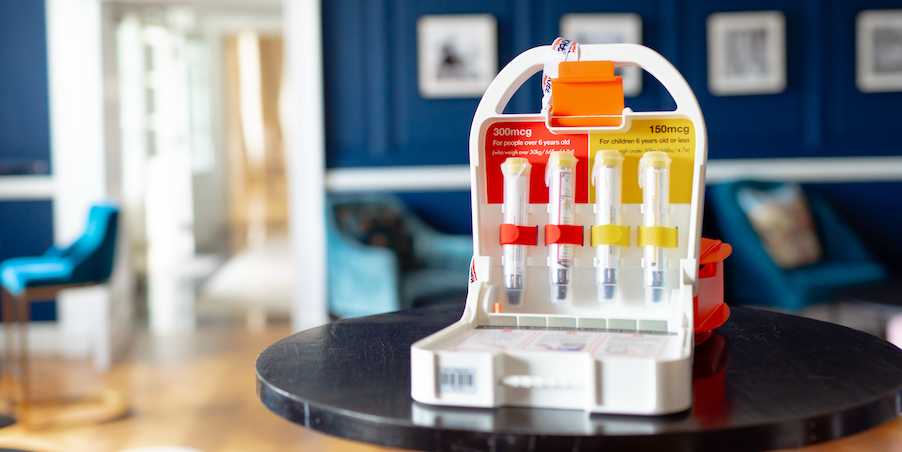
Just like a defibrillator, but for allergies, Kitt Medical provide wall-mounted emergency Kitts, with a subscription supply of emergency adrenaline pens and online CPD-accredited training.
Staff training is essential
Emergency readiness requires competent personnel. Understanding how to properly include people with allergies in day-to-day activities in the workplace and avoid exclusion is essential.
Staff must be trained to recognise the signs and symptoms of mild allergic reactions all the way to severe (anaphylaxis), including hives, swelling, difficulty breathing, and dizziness/loss of circulation.
Training should also cover the correct use of adrenaline auto-injectors. Confidence to act promptly is vital, as delays in treatment increase the risk of severe outcomes. Refresher training should be conducted at suitable intervals (every 6 to 12 months is standard) and especially after staff changes.
Implement clear emergency procedures
Workplaces should establish clear, step-by-step procedures for responding to allergic emergencies. Procedures should include:
Immediate recognition of anaphylaxis
Administering adrenaline promptly
Calling emergency services
Monitoring the affected individual until help arrives
Documenting the incident for compliance and review
Clear signage and accessible guidance support rapid action, even by staff who may be unfamiliar with the individual involved.

Whole workplace training in both allergen management and anaphylaxis treatment is vital for up-keeping health & safety standards.
Foster a culture of safety
Emergency readiness is more than equipment and training. A workplace culture that prioritises allergy safety reduces hesitation, empowers staff, and reassures employees with known allergies. Visible safety measures, including wall-mounted emergency kits and clear procedures, signal organisational responsibility.
Review and continuous improvement
Allergic emergencies should be reviewed after each incident. Lessons learned should be incorporated into updated risk assessments and training. Regular audits ensure compliance with Health and Safety at Work etc. Act 1974, the First Aid Regulations 1981, and relevant medicines legislation.
Preparedness saves lives. Organisations that invest in risk assessment, emergency equipment, training, and clear procedures minimise the impact of allergic reactions. Emergency readiness ensures workplaces are safe, inclusive, and compliant.

Since launching in 2023, we’ve deployed 2,000+ Kitts to schools and qualifying businesses across the UK, training 45,000+ people and treating 30+ life-threatening allergic reactions.