
Teen’s life-threatening allergic reaction at school caused by an unknown substance, treated with adrenaline from Anaphylaxis Kitt
Rydal Penrhos school, North Wales - October 16th, 2024
A young student’s life hung in the balance when he experienced an unknown severe allergic reaction after a run — but thanks to the swift actions of school staff using the schools’ Anaphylaxis Kitt, they’re safe today.
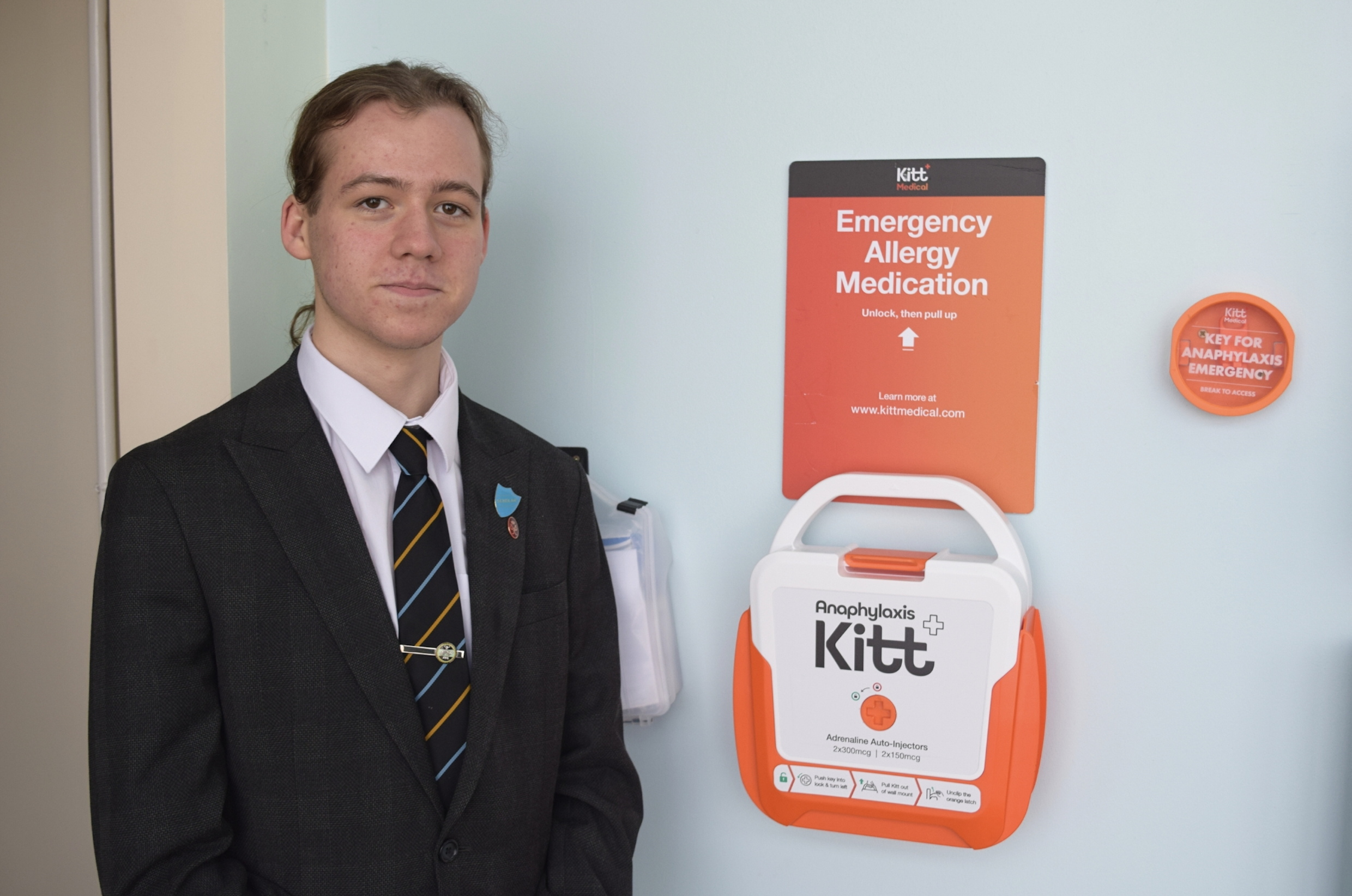
Finlay Perry, a student with lifelong allergies, recently experienced his first life-threatening anaphylactic reaction at school, an episode that took everyone by surprise. Thanks to Kitt Medical’s Anaphylaxis Kitt, which provides emergency adrenaline pens, Finlay received life-saving treatment within minutes. The terrifying experience has highlighted the critical need for accessible allergy resources in schools.
Finlay, 16, vividly recalled the day’s events.
“I woke up, had breakfast like normal, went to school, and had a roast dinner at lunch. It was all food I’d eaten before with no problems,” he shared.
But after a 5k run later that afternoon, Finlay’s symptoms began suddenly and alarmingly.
“My eyes were itchy, my throat was tingling, and I felt lightheaded,” he said. “At first, I tried to ‘tough it out’ and head to my speech and drama class, but soon I couldn’t ignore it. It got to the point where someone passing by asked if I was okay, and that’s when I knew I really wasn’t.”
Finlay’s parents, Shona and Rob Perry, both medical professionals, were deeply affected by the event, though each approached it from their unique perspectives as parents and doctors.
Shona, a consultant paediatrician, expressed shock when she got the call from the school: “He’s had allergies all his life, but he’s never needed adrenaline before. We always thought he was safe with his antihistamines and careful meal planning.”
The school staff acted swiftly, led by the catering manager Jonathan Stubbs, who administered an emergency adrenaline pen from Kitt Medical’s Anaphylaxis Kitt while they awaited an ambulance.
“When the Kitt was installed, we never expected to need it but recognized its importance” Jonathan said. “Fast forward six months, and we received an urgent call requesting the Kitt to be brought to the sports hall. Uncertain about what to expect but fearing the worst, I quickly made my way there, recalling the training videos that had prepared us to recognize and respond to severe allergic reactions. When I arrived and saw Finlay’s condition, it was clear we had to act immediately.”
Due to a critical shortage in emergency services, the estimated ambulance arrival time was three to six hours. Finlay’s father Rob, an A&E consultant, was called by the school, and described his alarm as he made his way to there. “I know that anaphylaxis is a Category 1 emergency. The idea of waiting hours for an ambulance is unthinkable,” he said, his voice filled with concern. “When I arrived, Finlay looked better, but once home, he started declining again. He turned pale, couldn’t get off the floor—it was surreal watching my son like this, knowing he needed more treatment immediately.”
The Perry family ultimately drove Finlay to the hospital themselves, where he received a second, higher dose of adrenaline. Reflecting on the ordeal, Finlay said, “I was panicking, honestly. I thought I’d be fine, then I wasn’t. By the time we got to the hospital, I didn’t know if I was getting better or worse.” Yet, despite his fear, Finlay bravely pushed through the experience. “The adrenaline helped save me. And the Kitt in school—it was a real lifesaver.”
Rob and Shona agree that Kitt Medical’s Anaphylaxis Kitt was a crucial factor in their son’s survival. “Had the adrenaline not been immediately available, things could’ve been much worse,” Rob admitted. “It’s unnerving to think that if this had happened a year ago, before these Kitts were around, we’d be telling a different story.”
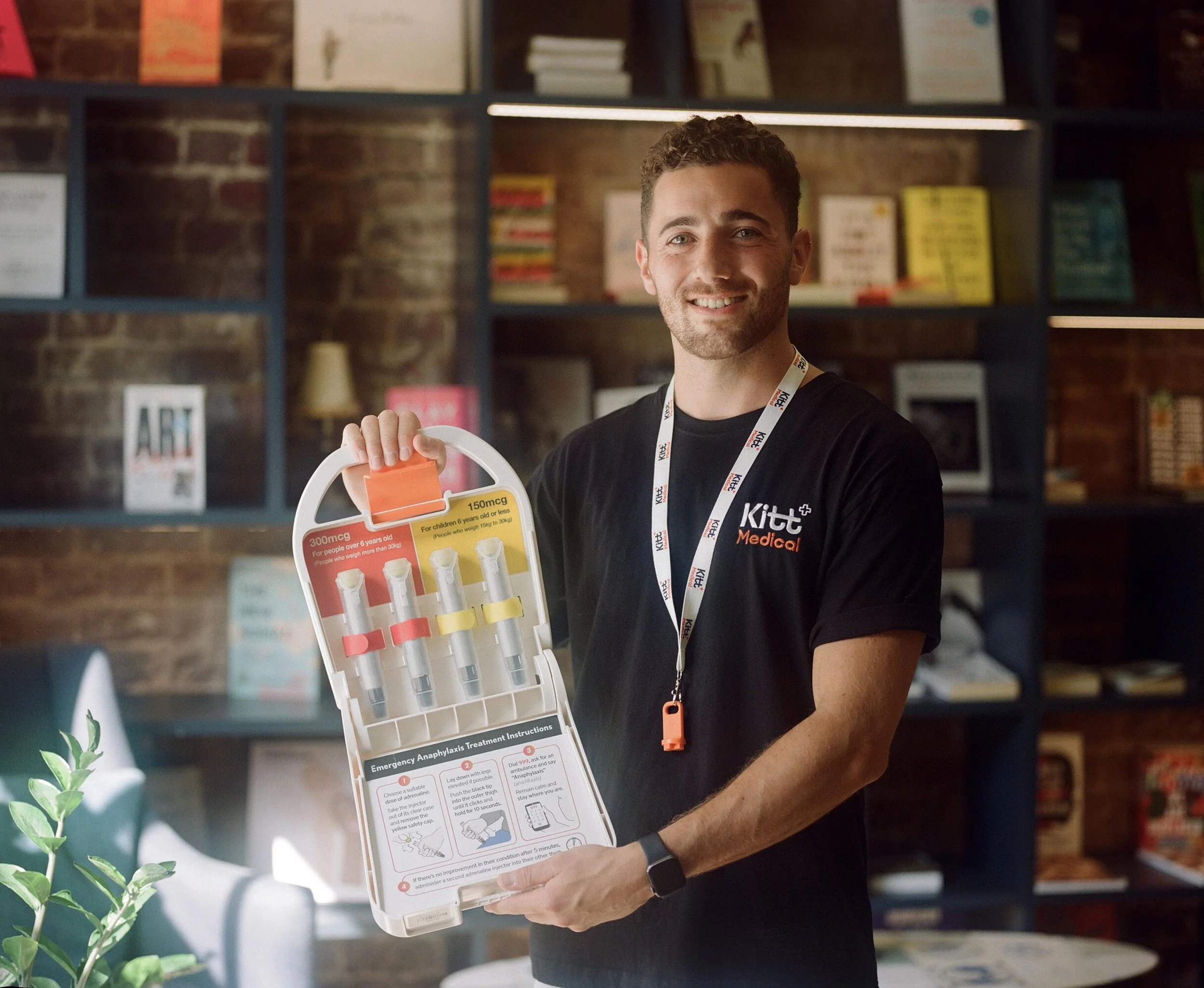
The incident serves as a powerful reminder of the need for improved allergy support in schools, where Kitt Medical’s Anaphylaxis Kitt—designed “just like a defibrillator, but for allergies”—is becoming a vital component. Zak Marks, the Co-Founder of Kitt Medical, lives with severe allergies himself. “We designed these kits to be there for moments like this, when time is everything. Knowing Finlay’s school had the resources to act quickly makes all the work we put into Kitt worth it.
Professor Adam Fox, a leading UK allergy doctor, backed up the quick actions of the school, adding: “The UK has one of the highest prevalence of allergy in the world, and anaphylactic reactions have been shown to be on the increase. Whilst the nature of anaphylaxis is unpredictable, adrenaline pens are the first line of treatment and are very safe. This case clearly exemplifies the value of having and using adrenaline pens, along with training, to keep those with allergies in schools safer.”
Vice Principal, Andrew Thomas commented on the incident and the presence of the Anaphylaxis Kitt: “We are incredibly thankful that we partnered with Kitt Medical. They have provided us with not only the life-saving kit but also comprehensive training that ensured our staff body feels confident in responding to such an emergency. Kitt Medical's commitment to equipping schools with these resources is truly invaluable.”
Finlay, now in recovery, has resumed his school life with new insight into his allergies and a lingering sense of gratitude. “I just want to say thank you,” he said sincerely. “I didn’t have my own adrenaline pens; I didn’t think I’d need them. But thanks to Kitt, I got the help I needed.”
With more and more schools implementing Kitt Medical’s Anaphylaxis Kitt, the hope is that no-one will be left vulnerable in a medical emergency. As Finlay’s mother Shona poignantly put it, “If there’s one thing every school should have, it’s a Kitt.”