
School Staff Member Saves Life of 8-Year-Old Child With ‘No Known Allergies’
An 8-year-old with no diagnosed allergies suffered sudden, severe anaphylaxis on the school playground. Staff acted within one minute.
Their preparedness - and access to an adrenaline auto-injector - is likely to have saved his life.
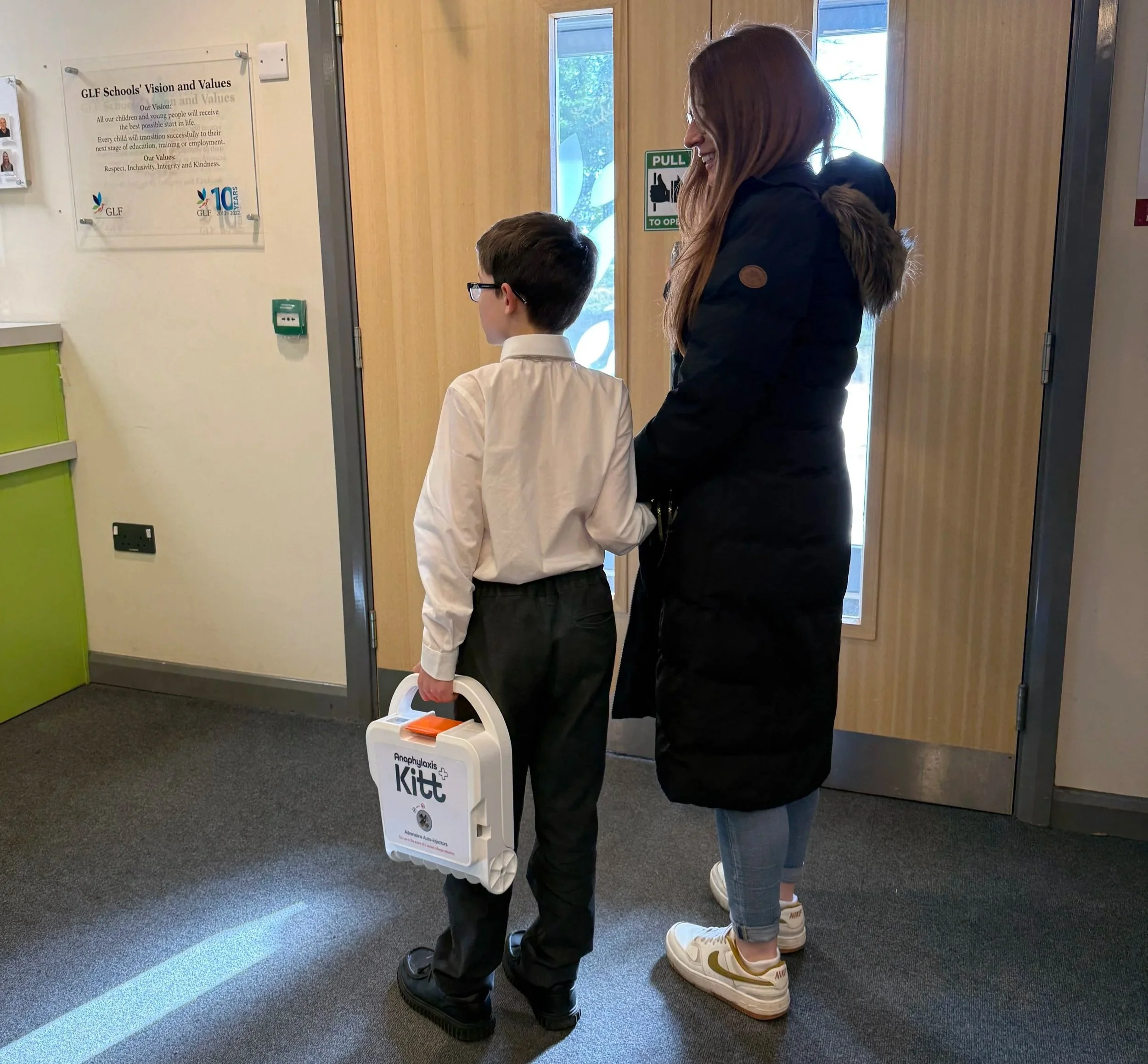
The boy and his mum, stood at the entrance of their school - Lime Tree Primary, in Redhill, pictured holding the Anaphylaxis Kitt that was used to treat his anaphylactic reaction.
What Happened
At 13:20 on a weekday lunchtime, an 8-year-old boy was brought into the school office from the playground.
Caroline Bell, the member of staff in attendance, immediately recognised signs of a severe allergic reaction (anaphylaxis):
• Both eyes severely red and swollen
• Difficulty breathing and speaking
• Hot and clammy skin
• Drowsiness - a sign of circulatory shock
Staff laid the child down with his feet elevated - the correct first aid position for anaphylaxis - and accessed the school's Anaphylaxis Kitt from the reception area.
At 13:21, just one minute after he was brought in, an adrenaline pen was administered into the upper outer thigh and held in place for 10 seconds.
The response was immediate. The child's breathing stabilised and the swelling around his eyes began to reduce. An ambulance and his parents had been called at the same time as the adrenaline pen was administered, and both arrived shortly after.
Paramedics took over, conducted observations, took statements from those involved, and transported the child to hospital - praising the availability of the Kitt at the quick actions of the school staff.
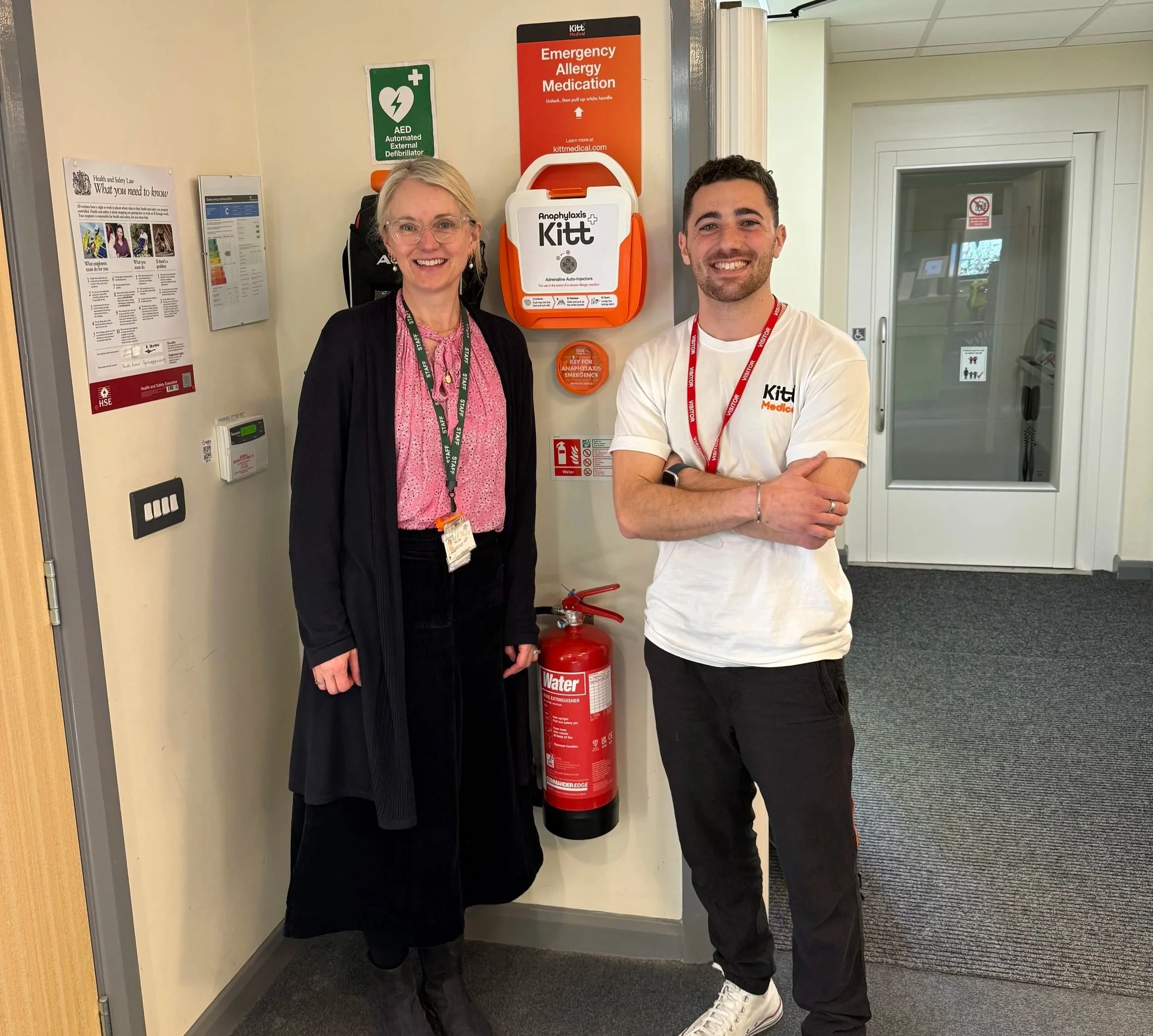
Caroline Bell, the office manager at Lime Tree Primary who used the Anaphylaxis Kitt without hesitation - stood with Kitt Medical’s co-founder Zak Marks in the school reception.
The Critical Safety Issue
This incident is a powerful reminder that anaphylaxis does not only affect those with a prior diagnosis. First presentations of severe allergic reactions can and do occur in children with no allergy history.
The child had no known allergies beyond hay fever. He was not on any allergy register. No one had reason to anticipate this reaction.
His 10-year-old brother has a severe nut allergy and carries his own adrenaline pens - but the 8-year-old was considered low risk.
"This school did everything right. They recognised the symptoms, acted fast, administered adrenaline without hesitation, and called for help simultaneously. Had this school not had an anaphylaxis kit on site, had staff not been trained to recognise the signs, or had they hesitated to administer adrenaline to a child not on their allergy register - the outcome could have been very different."
- Zak Marks, Co-Founder & CEO of Kitt Medical

Anaphylaxis Kitts have been deployed in over 2,000 venues, from local schools to the largest events venues in the UK.
What Every School Must Have in Place
Under Benedict's Law, all schools in England will be required to hold emergency adrenaline devices and have trained staff on site by September 2026. This incident demonstrates why that requirement cannot come soon enough - and why schools should not wait until the legal deadline.
☑️ Every school must have a comprehensive allergy and anaphylaxis policy
This policy isn’t just a paper on a shelf - it’s a living framework covering prevention, awareness, and response to allergic emergencies.
📝 Individual Healthcare and Anaphylaxis Action Plans must be in place
For any pupil with a known allergy, schools must have personalised medical guidance prepared and updated in partnership with families and healthcare providers.
💉 Schools must hold in-date adrenaline auto-injectors on site
Known commonly as adrenaline pens or AAIs, these life-saving devices must be purchased and stored at each school - not on a whim, but as a core part of emergency readiness.
⭐ Mandatory training for all staff
Teachers and adult staff will be required to understand allergy risks, recognise signs of anaphylaxis, and be competent in administering adrenaline in an emergency.
🆘 Reactions must be logged and reviewed
Every allergic incident or near-miss must be recorded in the child’s healthcare plan and used to continually improve safety procedures.
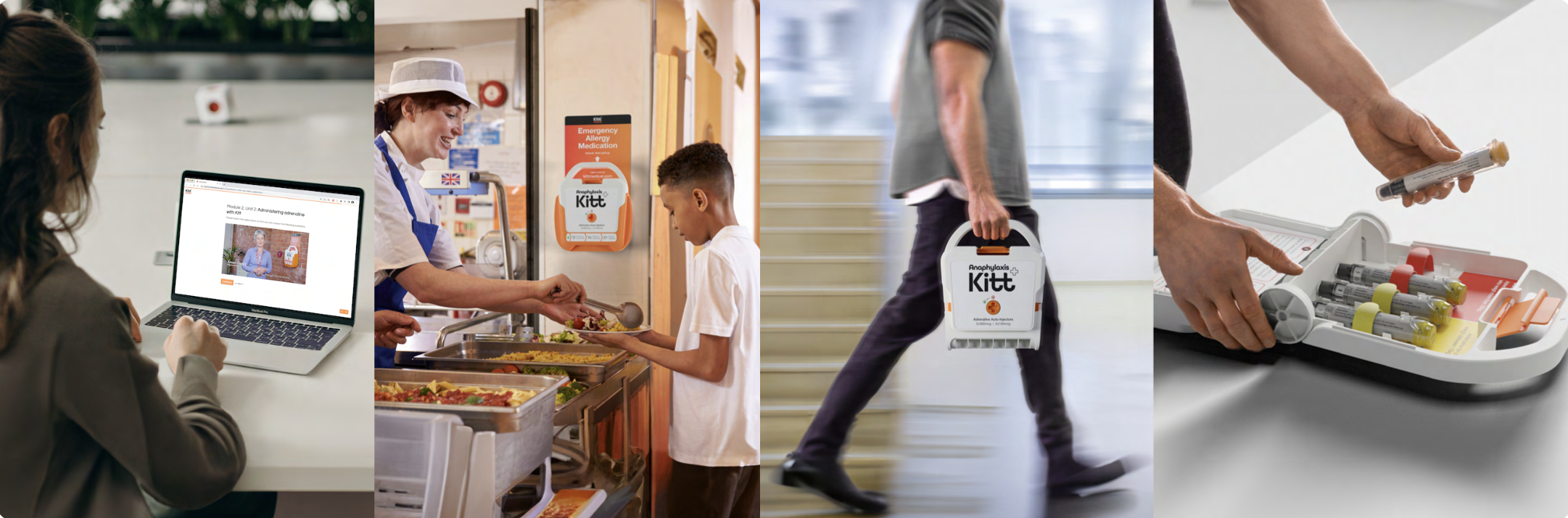
Providing an annual supply of adrenaline pens, which can be used to treat severe allergic reactions, our wall-mounted 'Kitts' are designed for emergency use, and come alongside online CPD training for all staff, all in one annual subscription service (as seen on BBC’s Dragons’ Den).
How We Can Help
Kitt Medical is the UK's only all-in-one cost-effective service that’s fully compliant with Benedict's Law, providing:
Guaranteed yearly supply of adrenaline pens on subscription.
Unlimited online CPD training on allergies and anaphylaxis for all staff.
Guidance, resources and allergy policies.
Incident reporting with no-cost replenishments.
Secure wall-mounted Kitt (like a defibrillator, for allergies).
Since launching in 2023, Kitt Medical has partnered with thousands of schools, trained more than 40,000 people, and contributed to saving 30 lives.